Tuesday, December 5, 2017

FUTURE OF IOT IN INDIA


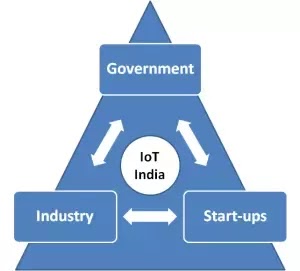
The internet of things is now growing exponentially and is reaching different verticals and industries. India is one of the countries where a IoT of innovation is happening around IoT across different verticals and technologies. The IoT ecosystem in India is mainly driven by 3 players: Government, Industry and Startups.

Government:
There is a lot of scope for IoT in India and Government has rightly recognised it and working towards it. The government has taken initiative and framed a draft policy to fulfill a vision of developing a connected, secure and a smart system based on our country’s needs. Government’s objective is to create an IoT industry in India of USD 15 billion by 2020.
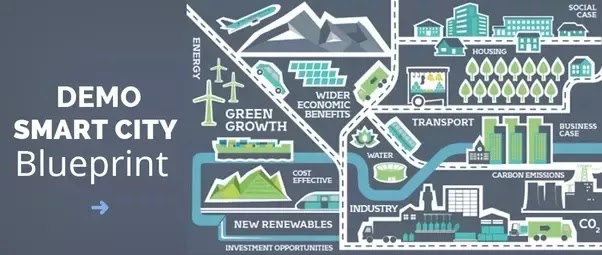
One of the key initiatives of the Government is to build smart cities across the country. Major aspects of a smart city being focused by the Government are:
  • Smart parking
  • Intelligent transport system
  • Tele-care
  • Woman Safety
  • Smart grids
  • Smart urban lighting
  • Waste management
  • Smart city maintenance
  • Digital-signage
  • Water Management
Other domain specific applications include smart water, smart environment and smart health. There is a plan to incorporate an incubator for to IoT to promote innovation.
Another key initiative taken by Government is the formation of Centre of Excellence on Internet of Things as a joint initiative with NASSCOM. As part of this joint initiative, Government plans to nurture and grow the IoT ecosystem.
With growth comes challenges:
  • The biggest implementation challenge will be the complete integration of technology and language. We have to keep in mind India’s diversity.
  • Cyber security is another obstacle. We are all well aware that internet and cyber crime are inseparable.
  • Issue of last mile connectivity.
Industries:
Another key player in this ecosystem is the Industry. IoT will transform how companies do business when they grab onto its innovations.
Statistics shows about one-fifth of manufacturing companies are using IoT to increase production and reduce costs. Why use IoT? What are the benefits? IoT offers better control of companies’ logistics. The use of the data can also enable them to offer their customers near real-time tracking of shipments. The future of the manufacturing sector in India is envisioned to be capital efficient and flexible. Design updates will be introduced more quickly, and customizations will easily be installed.
Automobile industries are another major adopters aiming to feature-rich, safer and cost effective products and services. They contribute 17% share as adopters. Transforming strategies are being worked upon currently are:
  • Usage Based Insurance (UBI) – this enables the device incorporated in vehicles to capture data and transmit it to the IoT platform which is then managed by UBI platform. This will enable insurance companies to build propositions and take it to market.
  • Intelligent Emergency Calling (eCall) – It enables cars to automatically call emergency services in case of a serious crash.
  • Stolen Vehicle Tracking (SVT) –This is currently implemented
The third largest industry is the IT industry. The world around has evolved with many innovations appearing on a day-to-day basis. These connect machine-to-machine and human-to-machine. Other notable industries that are adopters of IoT are mining, healthcare, banking and education.
Some of the companies who are active in IoT space in India are
  1. Intel– It is at the top of the ladder in the production of low-power chips to connect IoT devices.
  2. Volkswagen- It has added an SAP system that keeps track of their parts’ entire supply pipeline to help them track where items are located at all times.
  3. MediaTek: MediaTek has launched LinkIT ONE development platform which helps design and prototype IoT devices and wearables. They have been working greatly in nurturing and mentoring a lot of start-ups as well.
  4. Hero MotoCorp- The largest two-wheeler company in the country, with the help of IoT keeps tabs of vehicles available in different locations so that the dealer can be kept informed all the time.
  5. Hindustan Petroleum- By using IoT, it automates processes and creates real-time insights into the business. It has installed sensors in field units to capture information such as temperature, pressure etc.
  6. Apollo Hospitals– It has envisioned IoT will transform Health care and are exploring IoT in disease management. SUGAR is their diabetes management initiative which enables constant monitoring of the specific blood sugar levels using IoT enabled technology and transform them to personal health record system. It is also looking at IoT in effective inpatient care, post-discharge care and overall preventive health and wellness.
  7. Cisco– It is investing in the IoT space by building large teams and localized products.
  8. Bharti Infratel– It is using IoT for management and live monitoring of its passive infrastructure like tower, fuel management, energy distribution, monitoring and surveillance on the site etc.
  9. TVS Motor – It uses IoT for process automation, process quality control and traceability in shop floor, pollution control and monitoring, measurement of water flow and power consumption.
  10. IBM - It is investing heavily in enterprise application infrastructure and databases for connected devices. It is also promoting its cloud-based platform IBM Bluemix heavily amongst the developers.
Start-ups:
Another player in the ecosystem is Startups. Bangalore, Mumbai, Pune and Hyderabad are the four major cities where you would discover quite a few startups that are making a breakthrough. These are silently disrupting and innovating thereby breaking and creating newer realms each day within the IoT space.
One of the pioneering communities in IoT space is IoTBlr which is based out of Bangalore and has been instrumental in driving the IoT ecosystem in India. It is the 2nd largest IoT-focused meet-up community across the world and helps organize different talk, workshops, Hackathons, DIY sessions etc to help spread knowledge and awareness about IoT.
IoT HackDay is another group which is a Pan India initiative based out of Hyderabad. This group conducts Hackathons which helps bring collective knowledge and innovation to address the challenges in IoT and smart cities space. This event works towards addressing social challenges with the use of technology which is the need of the hour.
All in all, India is making progress and we have exciting years to look forward to. The synergistic working of Government, Industry and Startups will drive the eco-system to new heights.
FUTURE OF AI IN INDIA:
Recent advances in artificial intelligence (AI) are a wake-up call to policymakers in India, with every one of Prime Minister Narendra Modi’s flagship programs likely to be directly affected within the next few years. With China making rapid progress in AI-based research, it is imperative that India view AI as a critical element of national security strategy. Spurring AI-based innovation and establishing AI-ready infrastructure are thus necessary to prepare India’s jobs and skills markets for an AI-based future and to secure its strategic interests.
The Challenges Facing India’s AI Development
  • AI-based applications to date have been driven largely by the private sector and have been focused primarily in consumer goods. The emergent scale and implications of the technology make it imperative for policymakers in government to take notice.
  • Early lessons of AI success in the United States, China, South Korea, and elsewhere offer public and private funding models for AI research that India should consider.
  • The sequential system of education and work is outdated in today’s economic environment as the nature of jobs shifts rapidly and skills become valuable and obsolete in a matter of years.
For India to maximally benefit from the AI revolution, it must adopt a deliberate policy to drive AI innovation, adaptation, and proliferation in sectors beyond consumer goods and information technology services.
Policymakers should make AI a critical component of the prime minister’s flagship Make in India, Skill India, and Digital India programs by offering incentives for manufacturers, creating regional innovation clusters for manufacturing automation and robotics in partnership with universities and start-ups, incorporating market-based mechanisms for identifying the kind of skills that employers will value in the future, and promoting cloud infrastructure capacity building inside India.
The National Education Policy must make radical recommendations on alternative models of education that would be better suited to an AI-powered economy of the future.
The government should identify public sector applications like detecting tax fraud, preventing subsidy leakage, and targeting beneficiaries, where current advances in AI could make a significant impact.
India must view machine intelligence as a critical element of its national security strategy and evaluate models of defense research in collaboration with the private sector and universities.
Short-Term Actions
In the immediate term, policymakers in India should make AI a critical component of the prime minister’s flagship programs. As an example, within the Make in India program, India must create special incentives for manufacturers, such as relaxing regulations and lowering trade barriers, so they:
  • Invest in automation research in India by building research labs and design studios in India
  • Create regional innovation clusters, districts, and corridors by building strong linkages around manufacturing automation and robotics between universities and start-ups in India
  • Make India a global hub for machine intelligence–based innovation in manufacturing
Similarly, the Skill India initiative should be reworked with the twin objectives of being resilient to skills obsolescence through market-based instruments that tie together the employers, the training institutes, and the students as well as paying special attention to new skills needed to survive in an AI-led economy in the future.
Digital India must be reconfigured to establish cloud infrastructure inside India on a fast-track basis: the limited capacity as it stands today is a critical infrastructure gap and a national security risk. As a part of the Digital India initiative, New Delhi must create specific incentives for building large-scale data centers in India, ideally in partnership with the state governments. The government must identify specific regions in India that are geographically suited for building massive data centers, with an assured supply of power and other critical public infrastructure required for such facilities, and promote these as preferred destinations for investment in cloud infrastructure in India under the Digital India scheme.
The spirit of Startup India, that of creative destruction rather than protectionism, must be allowed to prevail. Recent regulatory decisions in India across cities and states bearing down on taxi aggregators Uber and Ola are regressive and counterproductive; these well-intentioned regulations must be eliminated if AI is to achieve its full potential. Unless the government and domestic industry allow the marketplace to experiment with untested business models enabled by the so-called peer economy, it is unlikely that the economy will create jobs resilient to and in an AI-driven economy. It is imperative to recognize that improving start-ups’ ease of doing business is not merely a regulatory measure to incubate or liquidate a business, but also a free market initiative to allow new and efficient business models to thrive.
For the first time in the history of democratic India, the formulation of a new education policy has been undertaken with a nationwide process of consultation and crowdsourcing. The massive task of analyzing the inputs received and devising the new policy is challenged both by the volume of the inputs and the complexity of myriad issues across India. Formulating the new education policy must not, however, be based solely on inputs received that are affected by current challenges, constraints, and limitations. The National Education Policy must take a long-term view of the skills economy, evaluate the continued relevance of the current system of sequential education, and make radical recommendations on alternative models of education that would be better suited to the economy of the future. Piloting and experimenting in such new models of education must commence in the immediate future before the rapid obsolescence of the current system begins.
Medium-Term Applications of AI in the Public Sector
The government should identify public-sector applications in India where current advances in AI could make a significant impact toward building skills and capabilities domestic applications of AI. For example, New Delhi could:
  • Apply AI-based techniques to recognize patterns and learn about tax evasion behavior, in an effort to mine public databases to detect tax fraud and money obtained illegally with the goal of minimizing tax evasion and maximizing tax revenue
  • Use AI to scan records, recognize patterns of fraud, and correlate subsidy claims with other consumer data to help detect leakages of subsidies and to learn and better target direct benefits to citizens through interventions most relevant to them
  • Develop natural language–processing capabilities to automate multilingual communication and interactivity across a whole range of government services and interfaces, for example, crowdsourcing via MyGov: A Platform for Citizen Engagement towards Good Governance in India, voice calls, automated helplines, and chatbots for the most routine citizen-government interactions
  • Use AI-based training and teaching software in various skilling and educational applications
In each of these areas, the government should collaborate with the private sector and university research labs to leverage existing technologies effectively and to rapidly create new technologies to address specific and well-defined problems.
Long-Term Strategy
India must view machine intelligence as a critical element of its national security strategy. At a time when AI is being viewed as a key component of foreign policy between the United States and Japan, with similar proposals of treatment being floated in India, the Indian government must formulate a national strategy on emerging technology trends with long-term strategic consequences.
India must seriously evaluate the DARPA model of defense research in conjunction with private sector and university collaboration in order to create dual-purpose technologies with a scope large enough to allow for development of civilian technology applications. Specifically, the Cyber Grand Challenge model of DARPA needs to be examined for its successful incentivization of academia and the private sector.
India must view machine intelligence as a critical element of its national security strategy.
The proposed National Intelligence Grid (NATGRID) platform, which would link citizen databases, might be a good pilot candidate for creating a machine intelligence–based platform with both national security and civilian benefits and should thus be taken up on a mission mode. Another possibility is Aadhaar, a platforms-based approach to governance founded on massive data sets, which builds on the possibility articulated in Rebooting India.
Authors Nandan Nilekani and Viral Shah enumerate five data-based platforms that could address a broad range of governance challenges. Expanding this list to ten public databases encompassing state and local governments would enable a robust machine intelligence architecture capable of plugging leakages in subsidies, better targeting benefits, and expanding the tax base.
Conclusion
From NATGRID to Aadhaar, machine intelligence–powered platforms can become a strategic instrument of governance in India across a wide range of public services. These platforms are not without their challenges: a machine intelligence–powered approach to governance will require robust digital privacy laws and a code of ethics on limits to using AI. However, the range of AI’s possibilities is so vast that the full spectrum of its opportunities is difficult to fully comprehend. While India may be late to wake up to the AI revolution, Indians of many hues—consumers, technocrats, researchers, and entrepreneurs—are already participants in this revolution with many of Indian origin driving and influencing research in the United States and elsewhere. A clarion call from the prime minister to all of them, to come together and help build an AI ecosystem in India, will go a long way for India to not merely catch up to but to take a quantum leap into the AI-driven future.

Source Links:
IoT League- Internet of things

Monday, November 20, 2017

Several Ways Big Data can Save or Destroy your Business


Nothing about Big Data is Small at all.
The internet pundits some 2 decades ago claimed the world to be becoming paperless and for all data present in the world going digital. With information piling up and computational capacities becoming increasingly heavy, the flow of data has significantly multiplied. As an outcome, for the management of this data, emerged a term called “Big data”. Big data is triggering an enormous change in the way businesses used to work. Companies are becoming heavily dependent on different tools for the management of big data.
Big data is the arrangement and organization of large volume of data. This data can be found in either structured or unstructured format. With massive information present in the market, the analysis and regulation of data get out of hands for many companies. However, big data management serves as a savior for such corporations that tend to accumulate a lot of information from different sources, for the purpose of market intelligence during the course of business. This data can be found in terabytes or petabytes.
The management of big data is the real determiner of a business’ success or failure. Proper gathering and management of information has a make or break effect on a company’s business model. It enables enterprises to search and analyze the data to find solutions to user-centric issues.
There are huge chunks of data and streams available in the market, therefore, the chances of missing on a great amount of important and critical information become high. As the need of market intelligence is increasing, the need for applications that focus on management of data services is gaining momentum too. There are many ventures taking the plunge, yet the question is if a company is actually willing to try luck in making its game better. Working with data analytics can be challenging for many companies as they require immense resources. The risks of loss are as high as the chances of gains.
Any entrepreneur can easily consider it a sign of intelligent business startup that it looks at the consistent players in the arena for muse. It is very vital for any business to look around and observe what trends the other actors in the market are following. This gives businessmen ideas to run the venture successfully and generate profit. It is extremely important that businessmen keep eyes fixed on the activity of the market and see how other fellows are making positive use of the data.
Study and analyze the ins and outs of venture area.
The major reason behind companies failing because of big data is their inability to remain focused on the correct data. Too much data and on top of that, irrelevant data is the recipe to fail a venture you are trying your luck at. In order to succeed, a company is required to properly investigate and study the patterns contemporary market actors are making use of their data through. A company should not just study the models of successful businesses but also those that failed miserably. This is the way they can get proper insight and understand the pitfalls they need to avoid in their endeavors.
It has been observed that marketers mistake in managing and identifying the right kind of data and use irrelevant heavy data in the business. This exhausts the customer when trying to find the required information from the pool of random unnecessary data consuming space. Corporations need to educate employees regarding the management of data to avoid any failure.

Migration.

Heads of different corporations collectively called migration the reason for their usage of low quality data in business. It was also found that more than most of the data migration costs above the estimated amount and take longer time. So, it should not be believed that migration is an easy process, it requires only the technically skilled to complete the task.
Companies should take help of specialists from all departments inclusive of the real data users. It should be made sure that they are familiar with the processes of migration and data management. They know about people with access to the data and how those people are making use of it. The specialists should ensure that data migration takes place step by step, which means that all requirements for the migration are met during and after the process. It has been observed that companies that try to migrate in haste usually cause themselves bigger troubles and financial losses. It takes them more time fixing these issues than allocating proper attention to the step by step process of migration.
A company before migrating data should consider some elements like redefining data and checking the quality of it. It should make a map of all strategies and techniques, also take into account the scope and budget of the data movement.
How to Avoid Internal Collision.
Giant corporations have large data distributed in different places of the organization. Each form of data serves a unique purpose and is regulated by different sets of people. There is hardly any communication among the users of that data as each form of data is relevant to its concerned department.
This can be extremely helpful for many companies as there is no internal collision of data used by different departments. Devolution data is a great step in the management of big data. This step minimizes the chances of a bottleneck situation within the company’s various departments. Segregating big data into sections is the most important function of the management of data. It is a delicate business and requires extremely balanced approach to separate data into right categories.
If data is not stored in the right way, it can affect the decision making of a company, therefore, its considered an important move in the data management and eventually for company’s business results. It is recommended that data is stored in the form of dashboard, reports, services etc. it should be filtered as per the data roles into categories varying from least to most important or however the organization deems fit. However, the main idea behind this division is splitting big data into exclusive smaller sections so, the data consumers can make best use of the available data.
Incorrect Data.
Employees that work with data know that mismanagement of data can leave irreparable effects on the decision making of a company. This can also shake customers’ trust in the company.
Invasive Data Mining
Invasive data use against a customer can infuriate him. A company should follow these ethical rules as principle policies to not use any customer’s information or make predictions regarding their situations based on their purchases. The basic information of a customer’s purchase should be kept secret from people, as violating this ethical code is tantamount to invasion of your customer’s privacy.
Some great online startup business ventures that transformed the way data was perceived.
Data analytics is a big growing industry with many potential investors and companies aiming at developing their business through it. There are many new but already renowned businesses that are leading the way for instance Uber, Foursquare, Spotify and Feedzai.
These companies have been using big data to their advantage and making best use of it.
Final Word :
Big data, market intelligence is one of the fastest growing techniques in the world. This helps the trader assess the market and understand the needs of customers.

Thursday, November 16, 2017

Basic information of bigdata

What is Big Data?

Data provides information. Accumulation of information is equivalent to accumulation of power and achieving more control over the related events and results. Enormous volume of data with diverse nature is generated In the modern world  that storing them and analysing them to get the required output had become a big challenge. The data could be anything from a real time transaction, climatic conditions, clicks on computers, mobile logs, posts or tweets from social media and much more. If the data so collected becomes impossible for a single machine store and process then such data could be named as Big Data.

Data which are very large in size is called Big Data. Normally we work on data of size MB(WordDoc ,Excel) or maximum GB(Movies, Codes) but data in Peta bytes i.e. 10^15 byte size is called Big Data. It is stated that almost 90% of today's data has been generated in the past 3 years.

Saturday, November 11, 2017

IoT Eco System and IoT Gateway security


Cybercriminals have an array of potential attack vectors to choose from when targeting IoT implementations. Here’s how to work towards comprehensive security in Internet of Things applications.
The Internet of Things may have a significant economic potential, but it also gives malicious actors an ever-expanding toolbox for cyber attacks. Gartner estimates that 5.5 million “things” get connected each day. It’s no wonder that hackers are beginning to target IoT devices with weak security for botnets and other attacks: they are often low-hanging fruit.
As both physical and digital threats increase, the need to find technologies to reduce such risks is also rising. This article will discuss the vulnerable points in an IoT application and the key strategies to resolve them, including details on maintaining supply chain integrity. It will also cover the fundamental elements needed to create a robust security paradigm.

Potential attacks for IoT applications

A handful of IoT-related attacks seem to receive the most attention in the popular press. There is, of course, the Mirai botnet that brought down a chunk of the internet last year. There’s BrickerBot, which renders insecure IoT devices unusable. On the industrial side, Stuxnet is famous for causing physical damage to nuclear centrifuges in Iran. And then there is BlackEnergy — a malware variant that shut down a portion of Ukraine’s power grid.
Attacks with a physical component: IoT attacks at the physical layer of the OSI Model require unauthorized access to physical sensing, actuation and control systems. Consider how electronic car theft works as an example. Since cars are essentially computers on wheels, hackers have a variety of options at their disposal. They can clone the radio signals from a key fob to open a locked vehicle. A hacker with physical access to a vehicle’s Controller Area Network (CAN) bus underneath the steering wheel can cause all sorts of mischief: They can unlock the car’s immobilizer that stops a thief from driving away and reprogram a new key for the vehicle. Access to the CAN bus could also enable them to hack the speedometer, door locks and other components.
The similar threat applies to industrial control systems, which have a decades-long history. Many industrial machines make use of supervisory control and data acquisition (SCADA), a technology that was created decades ago without much thought about security. As a result, an attacker with physical access to a SCADA system can cause significant damage to industrial facilities and critical infrastructure.
Similar threats could apply to medical devices. An attacker could gain access to an implantable device such as a cardioverter defibrillator or an external medical device such as an insulin pump to install malware.
Pure software attacks: This category includes malware variants such as viruses and trojans and worms. Also in this category is fuzzing, in which random data is thrown at software to see how it reacts. Distributed Denial of Service (DDoS) attacks can be software-based as well, although they can also occur at lower levels of the OSI Model. One potential example of an IoT-related DDoS risk would be safety-critical information such as warnings of a broken gas line that can go unnoticed through a DDoS attack of IoT sensor networks.
Network attacks: One of the biggest vulnerabilities of IoT devices is their wireless connectivity, which can make them remotely exploitable. Here, there are a variety of possible attacks that are possible on the devices, or “nodes,” connected to the network.
In an enterprise Internet of Things context, those nodes typically communicate with the gateway that is the core of that implementation. The node connects all of the IoT devices to the cloud.
Let’s assume that we have an industrial IoT application with interconnected gateways linked to each other in a mesh network. If a hacker jams the functionality of a gateway with denial of service requests, they can bring down the whole IoT project. Thus, a single attacker can stop the IT and OT elements of a system from interacting, as we discussed in the article “IoT gateway architecture: Clustering ensures reliability.” 
Cryptanalysis attack: In this type of exploit, a hacker tries to recover an encrypted message without access to an encryption key. Examples include brute-force attacks when a hacker tries every possible password combination to gain access to a system. The known-plaintext attack, with roots stretching back to WWII, is another example, in which a hacker has access to unencrypted text as well as its....Continue reading
Article By : Mohiit Bhardwaj

Monday, November 6, 2017

Industrial Robotics Market Analysis


The industrial robotics market is expected to grow from USD 38.11 Billion in 2016 to USD 71.72 Billion by 2023, at a CAGR of 9.60% during the forecast period. The main objective of the report is to forecast the industrial robotics market size in terms of value and volume for traditional industrial robots and collaborative robots. Further, it includes the detailed information regarding the drivers of the industrial robotics market, such as increase in investments for automation in industries and growing demand from small and medium-scale enterprises in developing countries. It also includes detailed information about restraints, opportunities, and challenges for the industrial robotics market. The study of the value chain of the industrial robotics market is also one of the objectives of the report, which includes information about suppliers and integrators in the value chain of the industrial robotics market.

Years considered for this report:

Base Year: 2016 
Estimated Year: 2017Projected Year: 2023Forecast Period: 2017–2023

Major players in the industrial robotics market ecosystem are identified across regions, and their offerings, distribution channels, and regional presence are understood through in-depth discussions. Also, average revenue generated by these companies, segmented by region, is used to arrive at the overall industrial robotics market size. This overall market size is used in the top-down procedure to estimate the sizes of other individual markets through percentage splits from secondary sources directories, databases (such as Hoovers, Bloomberg Businessweek, Factiva, and OneSource), and primary research. The entire procedure includes the study of annual and financial reports of the top market players and extensive interviews with industry experts such as CEOs, VPs, directors, and marketing executives for key insights.


To know about the assumptions considered for the study, download the pdf brochure


The industrial robotics market ecosystem includes traditional industrial robot and collaborative robot manufacturers such as ABB Ltd. (Switzerland), KUKA AG (Germany), Mitsubishi Electric Corp. (Japan), FANUC Corporation (Japan), Kawasaki Heavy Industries Ltd. (Japan), Yaskawa Electric Corporation (Japan), Seiko Epson Corporation (Japan), Stäubli International AG (Switzerland), NACHI-FUJIKOSHI CORP. (Japan), DENSO CORPORATION (Japan), Comau SpA (Italy), DAIHEN Corporation (Japan), Omron Adept Technologies, Inc. (US), Universal Robots A/S (Denmark), and CMA ROBOTICS SPA (Italy), among others. The ecosystem also includes system integrators such as Dürr AG (Germany) and Artech Automation AS (Norway).

Key Target Audience:

  • Original equipment manufacturers (OEMs)
  • OEM technology solution providers
  • Research institutes
  • Market research and consulting firms
  • Forums, alliances, and associations
  • Technology investors
  • Governments and financial institutions
  • Analysts and strategic business planners
  • End users who want to know more about the technology and the latest technological developments in the industry

The study answers several questions for the stakeholders, primarily which market segments to focus on in the next 2–5 years (depends on the range of forecast period) for prioritizing efforts and investments.


Report Scope:
In this report, the industrial robotics market has been segmented into the following categories:

  • Market, by Type:

    • Traditional Industrial Robots
    • Articulated Robots
    • SCARA Robots
    • Parallel Robots
    • Cartesian Robots
    • Others
    • Collaborative Robots

  • Market, by Industry:

    • Automotive
    • Electrical and Electronics
    • Plastics, Rubber, and Chemicals
    • Metals and Machinery
    • Food and Beverages
    • Precision Engineering and Optics
    • Pharmaceuticals and Cosmetics
    • Others

  • Market, by Geography:

    • North America
      • US
      • Canada
      • Mexico
    • Europe
      • UK
      • Germany
      • France
      • Italy
      • Spain
      • Rest of Europe
    • APAC
      • China
      • Japan
      • Republic of Korea
      • Taiwan
      • Thailand
      • India
      • Rest of APAC
    • RoW
      • Middle East and Africa
      • South America

  • Competitive Landscape
  • Company Profiles: Detailed analysis of the major companies in the industrial robotics market


Available Customizations:

With the given market data, MarketsandMarkets offers customizations according to the company’s specific needs. The following customization options are available for the report:

Product Analysis
  • Product matrix that gives a detailed comparison of product portfolio of each company.
Company Information
  • Detailed analysis and profiling of additional market players (up to 5).

Latest Post

Discover Free Online Developer Tools That Save Time

  As developers, we often find ourselves jumping between apps or writing quick scripts just to generate a UUID, calculate percentages, or ma...