Showing posts with label Automation. Show all posts

Saturday, August 26, 2023

Exploring New Horizons: Chandrayaan-3 Mission Unveiled


You can find the Official brochure of Chandrayan3  or here in link
https://www.isro.gov.in/media_isro/pdf/Missions/LVM3/LVM3M4_Chandrayaan3_brochure.pdf

In a groundbreaking leap towards scientific exploration, the Indian Space Research Organisation (ISRO) is gearing up for another extraordinary mission – Chandrayaan-3. Following the remarkable successes of its predecessors, Chandrayaan-1 and Chandrayaan-2, this upcoming mission is poised to unveil new mysteries of the lunar landscape.

Unraveling Lunar Mysteries: The Mission's Vision

Chandrayaan-3's primary objective is to continue the pursuit of lunar exploration, with a focus on improving technology and expanding our understanding of the Moon's geology, surface composition, and resources. This mission is expected to pave the way for potential future lunar missions, including manned missions and even deeper insights into the Moon's history.


Technological Marvels: Mission Highlights

The Chandrayaan-3 mission is set to employ an array of cutting-edge technologies. It will consist of a lander and rover, designed to work in harmony to explore specific areas of the Moon's surface. By leveraging advancements in robotics, communication systems, and remote sensing, ISRO aims to enhance the precision and comprehensiveness of data collection during this mission.


Scientific Objectives: What We Hope to Achieve

Chandrayaan-3 is anticipated to provide crucial insights into various scientific questions. By analyzing the Moon's mineral composition, studying its geological evolution, and examining the potential presence of water ice in permanently shadowed regions, the mission promises to contribute significantly to our understanding of lunar science and its relevance to Earth's history.


Collaboration and Innovation: Global Impact

The Chandrayaan-3 mission isn't just an endeavor by ISRO; it's a testament to global collaboration and the spirit of innovation. By sharing data, resources, and knowledge, international space agencies can collectively advance our knowledge of the cosmos. The mission thus not only fuels India's space exploration ambitions but also strengthens the global scientific community.


The Journey Ahead: Eagerly Anticipated

As the launch date of Chandrayaan-3 draws nearer, anticipation is building within the scientific community and space enthusiasts worldwide. The mission's success would mark yet another milestone for India's space program, while its discoveries could potentially reshape our understanding of the Moon and its significance in the grand tapestry of the universe.


Conclusion: Unveiling the Lunar Enigma

Chandrayaan-3 embodies the relentless pursuit of knowledge, innovation, and humanity's innate curiosity about the cosmos. With its high ambitions and promising technologies, this mission is set to uncover the Moon's secrets and redefine our relationship with our celestial neighbor. As we eagerly await the mission's launch, the promise of new discoveries and revelations beckons, inviting us to embark on this cosmic journey of exploration.


Stay tuned for more updates on the Chandrayaan-3 mission as we edge closer to this thrilling chapter in space exploration history. 


India creates history! The world takes notice of this proud moment for Indians. Huge thanks to @isro and the dedicated scientists behind #ISROChandrayaan3, #isrochandrayaan3mission, and the entire #ISROTeam. 🚀🌍 #ISROIndia

Tuesday, April 11, 2023

Robotics: The Future of Technology and Innovation

In today's world, robotics has become a major player in technology and innovation. From manufacturing to healthcare to space exploration, robotics is changing the way we work, live, and explore the world around us. In this blog post, we'll explore the world of robotics and how it's shaping the future.


What is Robotics?

Robotics is a field of engineering that deals with the design, construction, and operation of robots. Robots are machines that are capable of carrying out complex tasks autonomously or with minimal human intervention. They can be programmed to perform a variety of functions, from manufacturing and assembly to cleaning and maintenance.

Types of Robots

There are many different types of robots, each with its own specific functions and capabilities. Some of the most common types of robots include:

  1. Industrial Robots - These are robots that are used in manufacturing and production facilities. They are designed to perform repetitive tasks, such as assembly or welding, and can operate around the clock.

  2. Medical Robots - These are robots that are used in healthcare settings. They can perform delicate surgeries or assist with rehabilitation and therapy.

  3. Service Robots - These are robots that are designed to assist people with everyday tasks, such as cleaning or cooking. They can also be used in hospitality and customer service industries.

  4. Space Robots - These are robots that are designed to explore space and other planets. They are used to collect data and samples, and can operate in harsh environments where human exploration is not possible.

Advancements in Robotics

Over the years, there have been many advancements in robotics technology. One of the biggest breakthroughs has been the development of artificial intelligence (AI). AI allows robots to learn and adapt to new situations, making them more versatile and efficient.

Another major advancement has been the use of sensors and cameras to allow robots to interact with their environment. This has led to the development of autonomous robots that can operate independently without human intervention.

Impact of Robotics

Robotics has had a significant impact on many different industries. In manufacturing, robots have increased efficiency and reduced costs. In healthcare, robots have assisted with surgeries and rehabilitation, improving patient outcomes. In space exploration, robots have collected data and samples, expanding our knowledge of the universe.

However, there are also concerns about the impact of robotics on the workforce. As more tasks become automated, there may be job losses in certain industries. It's important to address these concerns and find ways to ensure that everyone benefits from advancements in robotics technology.

Conclusion

Robotics is an exciting field that is shaping the future of technology and innovation. As robotics technology continues to advance, we can expect to see more sophisticated robots that are capable of performing even more complex tasks. While there are concerns about the impact of robotics on the workforce, there are also opportunities to create new jobs and industries. Overall, the future of robotics is bright, and it's an exciting time to be part of this rapidly evolving field.

Tuesday, April 4, 2023

The Future of Transportation: How Technology Will Change the Way We Move


Transportation is a crucial part of our daily lives, and technology is already transforming the way we move around. In the coming years, we can expect even more changes that will revolutionize the way we travel. Here are just a few of the ways technology will shape the future of transportation:


  1. Electric and Autonomous Vehicles

Electric vehicles (EVs) are becoming increasingly popular, and many countries have set ambitious targets to phase out gas-powered cars. At the same time, autonomous vehicles (AVs) are being developed that could eventually eliminate the need for drivers altogether. Combined, these technologies have the potential to make transportation safer, more efficient, and more sustainable.

  1. Hyperloop and Other High-Speed Trains

Hyperloop is a proposed mode of transportation that would use vacuum-sealed tubes to transport passengers and cargo at high speeds. The technology is still in development, but it could revolutionize long-distance travel by significantly reducing travel times. Other high-speed trains, such as the Shanghai Maglev and the Japanese Shinkansen, are already in operation and could become even faster and more efficient in the future.

  1. Flying Cars and Personal Air Transportation

Flying cars have been a staple of science fiction for decades, but they're closer to becoming a reality than ever before. Companies like Uber and Airbus are developing vertical takeoff and landing (VTOL) vehicles that could transport people and goods through the air. These vehicles could reduce congestion on the ground and provide a new mode of transportation for those who live in hard-to-reach areas.

  1. Smart Infrastructure

Smart infrastructure refers to the integration of technology into our transportation systems, such as sensors and data analytics. This can improve traffic flow, reduce accidents, and enhance the overall efficiency of transportation networks. For example, smart traffic lights can adjust their timing based on real-time traffic data, while connected vehicles can communicate with each other to prevent collisions.

  1. Space Travel

Space travel is no longer the exclusive domain of astronauts and billionaires. Companies like SpaceX and Blue Origin are developing spacecraft that could eventually make space tourism a reality. In the future, it's possible that space travel could become a more accessible and affordable mode of transportation.

The future of transportation is exciting and full of possibilities. With the help of technology, we can create transportation systems that are safer, more efficient, and more sustainable. Whether it's electric and autonomous vehicles, hyperloop and high-speed trains, flying cars and personal air transportation, smart infrastructure, or space travel, the future is full of possibilities.

Tuesday, June 18, 2019

Benefits of Artificial Intelligence (AI)

Artificial Intelligence is leading the way to change life on Earth for the better
significantly.


Artificial Intelligence (AI) is an intriguing concept that has fascinated experts and laymen alike for years now.

1. Enhanced Automation
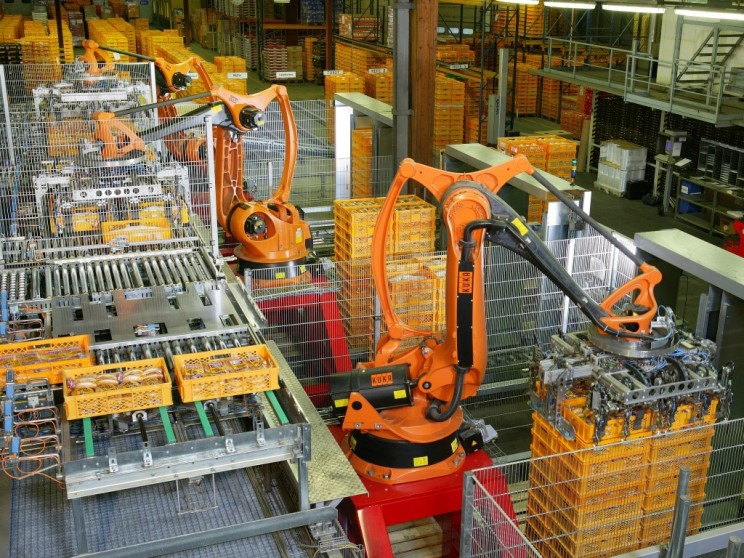
Artificial Intelligence for Enhanced Automation
Source: KUKA Roboter GmbH, Bachmann/Wikimedia Commons
Today, AI can perform intensive human labor and backbreaking tasks easily without the

need for human intervention. This has immensely automated several applications and tasks in
industries as well as in different sectors.
This has reduced operational costs and the cost of manpower substantially, bringing about an
]AI automation to a level that has not been witnessed before.
A beautiful example of the wonders of AI in enhancing the level of automation can be seen in
the Japanese machine tool builder, Okuma. They recently offered a multitude of innovations to
showcase the future of smart manufacturing.
This includes robots for plants of all sizes, new and improved machine tools, and smart machine
tools. This clearly demonstrates the blessing of AI in the automation of industries.

2. Eliminates the Necessity for Humans to Perform

Tedious Tasks
AI Eliminates Tedious Human Tasks
Source: Chiragjain dr/Wikimedia Commons
Artificial Intelligence can also be considered a boon to humanity given the fact that
it liberates humans and allows them to perform tasks in which they excel.
We can base the necessity of AI and its applications on the argument that this technology takes
care of all the tedious tasks that human must perform in order to achieve varied results.
Machines excel in taking care of cumbersome works, and this leaves enough room and time
for humans to work on more creative and interpersonal aspect of their life.
Let’s take the example of the banking sector that has and will be seeing a major breakthrough,
thanks to the applications of AI. Financial institutions today are seen taking
full advantage of this technology to make banking quicker and infinitely easier for the
consumers.
This has gone a long way in helping financial analysts get some reprieve from the tedious
nature of their jobs and focus on deeper research and analysis of all-around
consumer experience.

3. Smart Weather Forecasting

Smart Weather Forecasting with AI
Source: Mohammed Tawsif Salam/Wikimedia Commons
In the recent few years, we have seen the use of Artificial Intelligence and its technologies in
weather and climate forecasting. The field of “Climate Informatics” is constantly blossoming as
it inspires a fruitful collaboration between data scientists and climate scientists.
This collaboration has come up with tools to observe and analyze increasingly complex climate
data. This has helped significantly in bridging the gap between understanding and data.
There are countless applications of AI aimed for accurate weather forecasting. IBM,
for instance, used its computers to improve their forecasts back in 1996.
This American multinational has ever since been refining and enhancing its forecasting methods
with the incorporation of AI.
Humans now have an increased understanding of the effects and reasons for climate change.
The field of weather forecasting is super demanding and calls for intensive computing and
deep-learning networks that can empower computers to dish out complex calculations.
Therefore, the advances in AI and its enviable computational power have led to the emergence
of supercomputers.
This has given the man a much-needed insight into extreme climatic events so that possible
disasters and natural hazards can be given a wide berth.

4. Next Generation Disaster Response

AI for Disaster Response
Source: US Defense Advanced Research Projects Agency/Wikimedia Commons
California saw major destruction in 2017 due to the onslaught of wildfires. More than 1 million
acres worth of land was reported burned in wildfires that claimed the lives of 85 people with
249 people listed as missing.
Due to the threats of climate change, more and more companies are now
embracing artificial intelligence to fight disasters with algorithms.
Hence, AI has aptly demonstrated its indispensability in analyzing smart disaster responses and
providing real-time data of disasters and weather events.
This is extremely useful for humans as they can detect the vulnerabilities of an area and hence
help in improving disaster preparation.
The AI techniques are also beneficial as they warn us in a timely manner with enough room to
organize ourselves in the face of an impending disaster and minimize loss.
It is also expected that deep-learning will soon be integrated with disaster simulations to come up
with useful response strategies.

5. Frees Humans of The Obligation of Taking Up All

Responsibilities

Modern Warfare with AI

Source: Program Executive Office Soldier/Flickr
It is a common belief that AI will one day be the end of humanity and robots and machines will
take over the planet completely and permanently.
However, what is usually ignored is the fact that the incorporation of AI in our daily lives helps
free us of all responsibilities that we do not want or need.
Needless to say, we cannot let superior intelligence blindly control us. However, not employing
its benefits for our advantage would be an equally ignorant thing to do.
A persuasive example in this regard is the future of war and weaponry. AI shows immense
promise as a potential application in war as stipulated in Paul Scharre’s book “Army of None.”
As stated in his book, in the future, militaries and machine intelligence are expected to work in
tandem to conduct wars.

6. The Perfect Marriage of Creativity and Technology

AI can most definitely be called the perfect marriage of creativity and technology.
Artificial Intelligence is nothing but a robotic machine that has the ability to think intelligently
and creatively as well as translate these thoughts autonomously in varied human applications.
This fundamental basis of Artificial Intelligence is what has and can revolutionizethe face of
mankind. AI is not merely a unidimensional technology.
Its benefits and applications are far more important and noteworthy than its apprehensions, and
this is precisely what will help humans in the future as well.
The Generation Z engagement strategies show just how AI marries creativity and technology to
create the perfect results. Using the powerful tool of Artificial Intelligence, brands can now apply
the correct technology to align with the needs and wishes of Gen Z.
This marketing solution that is largely data-driven is just one in a huge list of applications of AI
in bringing its technological goodness and creativity together.

7. Zero Scope for Errors

AI for Better Accuracy
Source: Pixabay
Clive Swan, the Senior Vice President of Oracle Adaptive Intelligent Apps, shares the promise
of AI and its automation as it eliminates the compulsion of human intervention an hence,
removes all scope for human error.
The best thing about AI and its plenty of technologies is that it is error-free. Industries and
organizations usually have to leave a significant room for human error because it is natural to
see its presence in manual human labor.

Latest Post

Discover Free Online Developer Tools That Save Time

  As developers, we often find ourselves jumping between apps or writing quick scripts just to generate a UUID, calculate percentages, or ma...