Tuesday, December 24, 2019

Most Popular IoT Devices - List Of Top IoT Devices

List Of Top IoT Devices Examples In 2019

Enlisted below are the top Internet of Things devices that are used all over the world.
You can actually buy and experience these devices for yourself! That is the beauty of this list.
Let's Explore!!

#1) Google Home Voice Controller
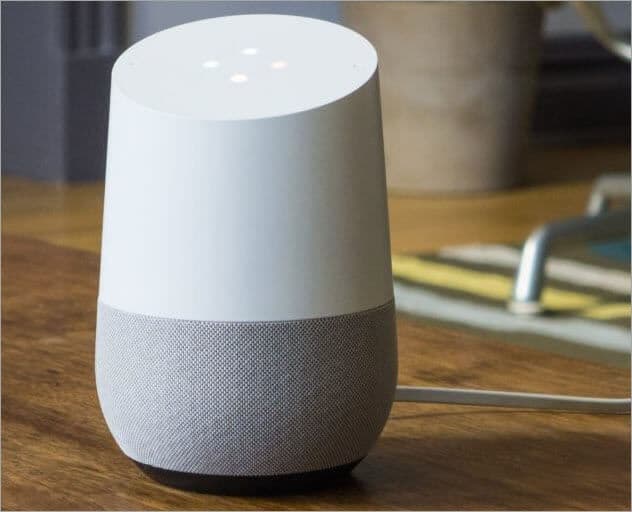
Google Home Voice Controller
Google Home Voice Controller is a smart IoT device which allows the user to enjoy features like
media, alarms, lights, thermostats, control the volume and much more functions just by their voice.
Cost: US $ 130
Top Features:
  • Google home allows a user to listen to media.
  • Let's the user to control TV and speakers.
  • It is capable of managing timers and alarms.
  • It can remotely handle the volume and home lights as well.
  • It helps the user to plan their day and get things done automatically.
Where to Buy: Google Store, eBay, Flipkart, dell.com, google express, Verizon etc.

#2) Amazon Echo Plus Voice Controller

Amazon Echo Plus voice controller
Amazon Echo Plus voice controller is a popular and reliable IoT device. It is capable to run songs,
do phone calls, set timers and alarms, ask questions, provide information, check the weather,
manage to-do & shopping lists, manage house instruments, and several other things.
Cost: US $ 99.99
Top Features:
  • Amazon Echo can play songs, connect to external speakers or headphones.
  • It is capable of making calls and messaging on voice command.
  • Amazon Echo has around 6-7 microphones, good technical specification and sound
  • cancellation. It is capable of hearing your voice from all directions even when songs are played.
  • Controls compatible smart home devices including lights, plugs, and more.


Check Price and Get it Here: Amazon Echo Plus voice controller


#3) Amazon Dash Button

Amazon Dash Button
Amazon Dash Button is basically a device that gets connected over internet Wi-Fi and makes
sure that the user does not lack important household items like soft drinks, grocery material,
medical and personal care, kids and any pet items ever again.
If a user wants to fully utilize the Dash Button, then the user must be an Amazon Prime member.
Cost: US $ 4.99
YouTube Link: Amazon Dash Button
Top Features:
  • It allows the user to order products quickly and there is no need to recall the
  • message again and it also helps to reduce the time frame for searching the required product by the user.
  • Amazon Dash Button also allows the user to reorder from popular brands – like Bounty, Tide, Cottonelle, Glad, Clorox etc.
  • It does not accept fresh order if the prior order is not complete unless the user allows multiple orders.
  • It is a good and reliable IoT product that is developed for making the user’s lifestyle
  • simple and easy.
Check Latest Price and Get it Here: Amazon Dash Button

#4) August Doorbell Cam

August Doorbell Cam
August Doorbell Cam is an effective IoT innovation. August Doorbell Cam allows you to answer your door from anywhere or remote location. It constantly checks your doors and also captures
motion changes in your doorstep.
Cost: US $ 199
YouTube Link: August Doorbell Cam
Top Features:
  • Doorbell Cam pairs with all August Smart Locks to easily let guests into your home.
  • The integrated floodlight delivers clear, full-color HD video even full-color.
  • It constantly monitors your doorstep and will click the moments leading up to a motion alert.
  • Free 24 hour video recording.
  • It comes with a speedy and hassle-free installation process.

Where to BUY: Check Latest Price and model here August Doorbell Cam

#5) August Smart Lock

August Smart Lock
August Smart Lock has proven to be a reliable security IoT device. It allows the user to manage
their doors from any location hassle-free. It helps the user to keep thieves away and family in
your home.
Cost: US $ 220
YouTube Link: August Smart Lock
Top Features:
  • Allows the user to know about each and every person coming and going into your home.
  • Provides unlimited digital keys and no fear of stolen key.
  • It gives the status updates of your door as it is properly closed or not.
  • It has a good auto-unlock feature and as soon as the user arrives near the door it opens automatically.
  • Easy installation and is compatible with most standard single cylinder deadbolts.
Where to BUY: Check latest price and model here: August Smart Lock

#6) Kuri Mobile Robot
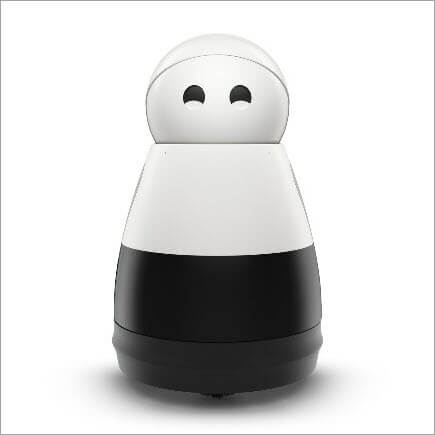
Kuri Mobile Robot
Kuri is the first sort of home robot and most popular too. It is specifically designed for entertainment.
Kuri interacts with the users and captures moments all around the house daily.
Cost: US $ 700
YouTube Link: Kuri Mobile Robot
Top Features:
  • Kuri has capacitive touch sensors and HD camera.
  • It is integrated with gestural mechanics and microphones.
  • It has heart light and speakers.
  • It includes integrated mapping sensors and drives system.
  • It has a good processor and smooth charging pad.
Where to Buy: Kuri Mobile Robot

#7) Belkin WeMo Smart Light Switch

Belkin WeMo Smart Light Switch
The WeMo Light Switch helps a user to manage your home lights from the wall, your mobile or by using your voice. This smart light switch connects to your existing home Wi-Fi network to give
wireless access of your lights – with no subscription or hub required.
Cost: US $ 39.95
Top Features:
  • It comes with a clip-on faceplate and no screws are required.
  • Easy on/off, push anywhere to toggle.
  • WIFI indicator and night light available.
  • WIFI reset and power restart available.
  • It has a very quick, simple installation.

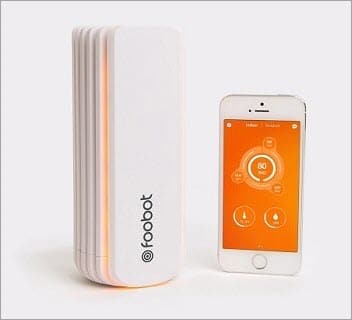
#8) Footbot Air Quality Monitor

Footbot Air quality Monitor
Foobot is a reliable IoT device which is helpful in measuring indoor pollution and leads to
improved air quality in houses, workplace, and indoor public spaces. It often gives accurate
results.
Cost: US $ 199
YouTube Link: Footbot Air Quality Monitor
Top Features:
  • It cleans the air pollution.
  • Keeps the humidity and temperature levels in check.
  • Helps to develop more focus and energy by breathing fresh air.
  • Supports to increase the lifespan of the users.
  • It has a very fast and simple installation process.
Where to buy: Check product details Foobot Air Quality Monitor

#9)  Flow by Plume Labs Air Pollution Monitor
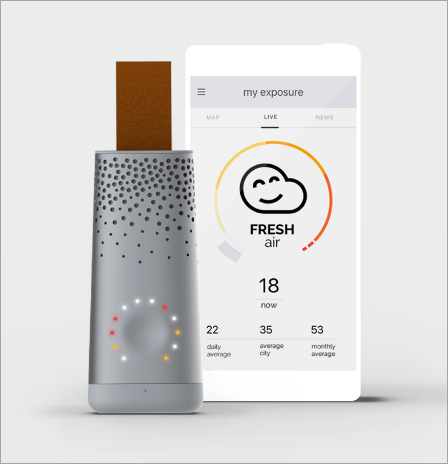
Flow by Plume Labs Air Pollution Monitor
Flow Air pollution is an amazing discovery in the IoT market. It is a personal air quality tracker
which informs the user in which area the air quality is bad and polluted and vice versa. It shows
all the results in the map available in its app.
Cost: US $ 179
YouTube Link: Flow Air pollution
Top Features:
  • It tells the user about air quality and has a vegan leather strap.
  • It comes with a stainless steel body.
  • It has capacitive touch on its body.
  • It includes good quality RGB LED’S.
  • It has a good user guide and simple installation.
Company Website: Flow Air pollution
Where to Buy: Flow.plumelabs, Amazon, eBay etc.

#10)  Nest Smoke Alarm
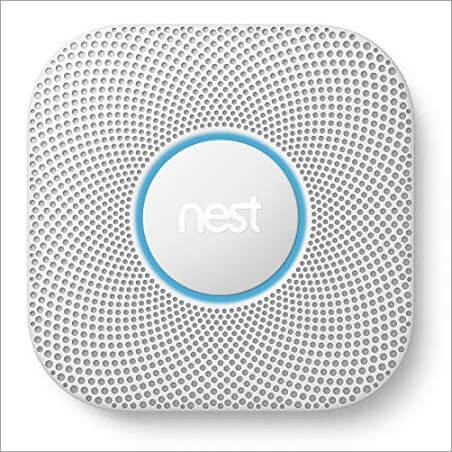
Nest Smoke Alarm
Nest Smoke Alarm is a very useful IoT device. It is a smoke alarm that thinks, speaks and alerts
your mobile phone about any un-wanted emergencies in your home. It automatically tests itself.
Cost: US $ 119
YouTube Link: Nest Smoke Alarm
Top Features:
  • The user can manage this alarm with the phone without any extra hardware.
  • Installation is easy and can be set up through iPhone, iPad or Android device.
  • Appearance is very good.
  • It also has certain colors like green, yellow, red to communicate with a user according
  • to the situations.
Where to buy: See product details here Nest Smoke Alarm

#11) Nest T3021US Learning Thermostat Easy Temperature Control
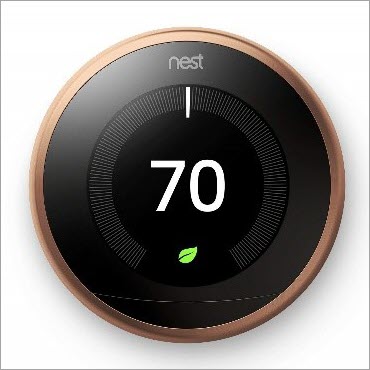
Nest T3021US Learning Thermostat Easy Temperature Control
It helps to control the home's temperature and cooling environment with no effort from the user
for Nest thermostat. It adapts according to your activities and manages room the temperature
automatically based on your routine.
Cost: US $ 249.99
YouTube Link: Nest thermostat
Top Features:
  • It can interact with Alexa for voice control.
  • It saves a lot of energy by adapting to the room temperature.
  • It helps to read the display across the room.
  • It is compatible with many types of equipment.
Where to Buy: See product details here Nest thermostat

#12) Philips Hue Bulbs and Lighting System
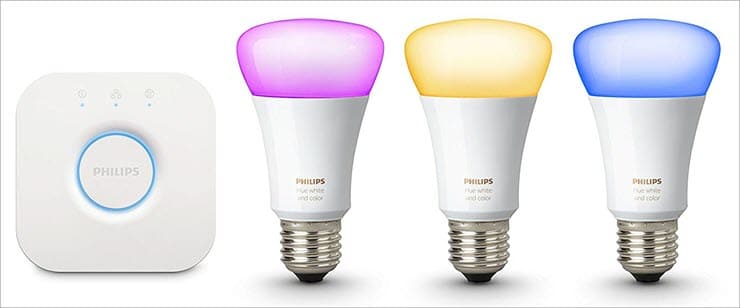
Philips Hue Bulbs and Lighting System
Philips Hue is a very famous IoT device and is used as a personal wireless lighting system that
allows to control your light and create the right ambiance for every moment.
It makes the smart home to live with the most connected lights in the world.
Cost: US $ 30 to US $ 100
YouTube Link: Philips Hue
Top Features:
  • Smart and away from home control.
  • Light schedules and comfort dimming.
  • Create your ambiance, wake up, well being, etc.
  • Sync with music and movies.
Where to Buy: Philips Hue

#13) Bitdefender BOX IoT Security Solution
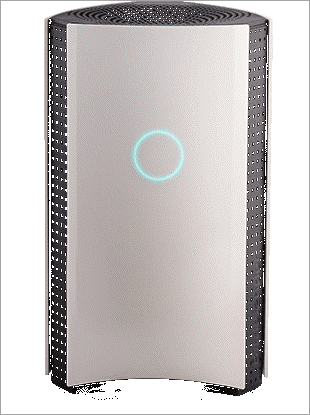
Bitdefender BOX IOT Security Solution
Bitdefender Box is a very useful IoT device. It is the Smart Home Cybersecurity Hub that prevents
various Internet-connected devices from malware, stolen passwords, identity theft, spying etc.
Cost: US $ 179.99
YouTube Link: Bitdefender Box
Top Features:
  • It provides Double-Clad Home Network Security to users.
  • Bit defender comes with a high-performance ratio.
  • It provides a unique and rich feature of parental control.
  • It comes with award-winning technology.
Where to Buy: Bitdefender Box

#14) Ring Doorbell
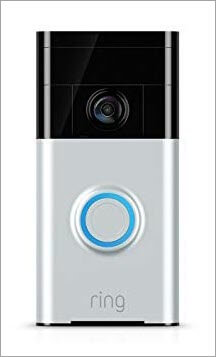
Ring Doorbells
Ring Doorbells is a reliable IoT product and allows the user to answer the door from any place
using your smartphone. Protect your home with security cameras from Ring video doorbell.
Cost: US $ 99.99 to US $ 499
YouTube Link: Ring Doorbells
Top Features:
  • It provides Double-Clad Home Network Security to users.
  • Night vision and interchangeable faceplates.
  • HD video quality and motion detection sensor.
  • Comes with a rechargeable battery with high performance.
Where to Buy: Ring Doorbells

#15) WeMo Insight Smart Plug
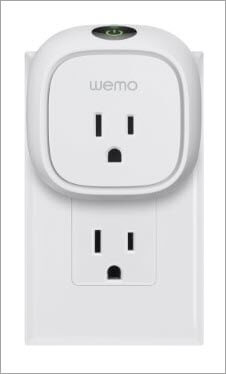
WeMo Insight Smart Plug
WeMo smart plug is a good IoT product which helps to turn on your lights, turn appliances on/off
and provides the ability to monitor them from anywhere remotely.
Cost: US $ 49.99
YouTube Link: WeMo smart plug
Top Features:
  • It gets insight into home energy usage and is easy to use and install.
  • It also creates rules, schedules and receives notifications.
  • Compatible with both IOS and Android devices.
  • It integrates with Alexa or Google voice for hands-free voice control.
Where to Buy: WeMo smart plug

#16) Logitech Harmony Universal Remote

Logitech Universal Remote
Logitech Harmony is a powerful and useful IoT smart device for daily purposes. It is a universal
remote which lets you control your house media, lighting, and other smart devices from one
location remotely.
Cost: US $ 49.99 to US $ 349.99
YouTube Link: Logitech Harmony
Top Features:
  • It has features of up to 8 remotes, reduces complexity and clusters in-house.
  • It supports more than 5000 brands and new brands can also be added in the future.
  • It has a simple online setup using your computer.
  • It includes one-click activity buttons like watch a DVD so that it switches to it.
Where to Buy: Logitech Harmony

#17) Particle Photon Wi-Fi with Headers
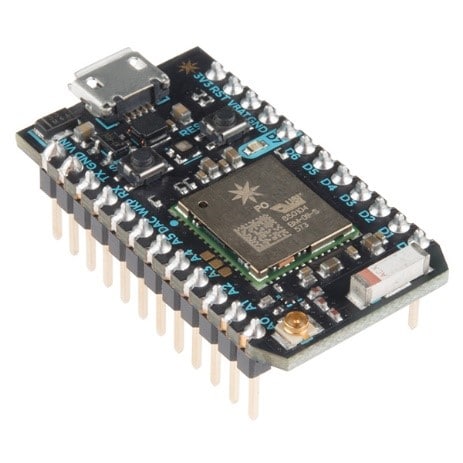
Particle Photon Wi-Fi with Headers
This is the particles IoT board which provides everything that a user needs to build a connection
project. It makes prototyping simple and easy due to plugins.
Cost: US $ 19 to US $ 25
YouTube Link: Particle Photon Wi-Fi
Top Features:
  • It has an open source design.
  • It comes with a real-time operating system.
  • It has particle WIFI module and RGB LED.
  • It also has pre-soldered headers.
Where to Buy: Particle Photon Wi-Fi

#18) NETGEAR Orbi Ultra-Performance Whole Home Mesh Wi-Fi System

NETGEAR Orbi
It is an extremely powerful Internet of Things device which maintains the whole home mesh Wi-Fi
system that is capable to cover the whole house with fast WI-FI. It can work with the existing
internet service provider.
Cost: US $ 323.99
YouTube Link: NETGEAR Orbi 
Top Features:
  • It has a simple and quick installation with Orbi app.
  • It allows pausing Wi-Fi to do the quick status check.
  • Eliminates Wi-Fi dead zones and buffering.
  • Provides good speed Wi-Fi even if many devices are connected at the same time.

Tuesday, September 17, 2019

The top 10 strategies to secure your IoT devices


Ohio-based Cyber Security Services has released a list of its top 10 strategies for organisations to secure their vulnerable IoT devices.
The company argues that millions of IoT devices lack adequate security controls and are therefore exposed to cyberattacks. Security fears are paramount in both enterprise and consumer minds; a study from Metova in June found that while 85% of consumers polled would like to monitor utility usage in real-time through IoT devices, full understanding of the term was still required.

The top 10 security strategies are:

  1. Changing or updating default passwords over a period of time.
  2. Maintaining separate corporate network from vendor-managed and unmanaged IoT devices
  3. Preventing IoT devices from communicating outside the organisation unless it is extremely important.
  4. Businesses can put control to limit the number of vendors that are being granted remote access to IoT devices.
  5. Implementing a NAC solution to improve IoT security by detecting maximum devices and identifying suspicious connections to the network.
  6. Implementing vulnerability scanners provided by commercial vendors help identify the types of devices connected to a network.
  7. Running an IDS and IPS on the network to detect malicious network traffic, which saves an IoT device from being compromised.
  8. Appropriate device management to make sure that the remotely managed devices are catalogued with records in place detailing registration, configuration, authentication, and other pertinent device data.
  9. Restriction on internal and external port communication that should be allowed only when needed.
  10. Removal of incompatible OS, applications, and devices from the network for increased safety.
A recent study from Irdeto found healthcare organisations lack necessary measures to counter cyber-attacks despite being aware of the areas that are vulnerable and needs protection. In a survey of 232 healthcare security decision-makers, 50% of the respondents cited IT network as the most prominent vulnerable spot within healthcare organisations, followed by 45% of the mobile devices and accompanying apps and 42% IoT devices.

Monday, September 2, 2019

Key factors to plan your first IoT product

The Internet of Things (IoT) is often talked about as some distant future vision. Consumers dream about connected lives, journalists talks about how IoT will change the web.
It might come as a surprise to learn that 451 research found in July 2016 that 65% of enterprises were already using IoT based Technologies and solutions. Gartner says that by 2020 there will be more than 26 billion IoT devices will be available for public

Below are the factors that entrepreneurs and startups should consider while planning for their first IoT product:


  • Prototype Cost: 
  • Cost is very important driver in almost all IoT based projects. Its recommended to invest resources in prototype extensively, before jumping into full scale product development. Prototyping is the best route to happy customers so be sure to test user’s desire, the hardware’s materials and costs and the product’s ease of use because it help you to figure out if the desired prototype fits in users lives and also check if they like the product. Skipping the prototyping phase locks your company into a product that may fall flat. A more cost effective approach is building a Minimum Viable Product prototype to help building a roadmap to cost reduction and bring out the business case.

  • Production cost: 
  • Do not underestimate the production cost for IoT based solution. Many startup IoT projects fail not because of the bad idea but they tend to focus on hardware and software at the same by doing multiple things are the same time with the limited resource. The cost to produce hardware at scale often catches entrepreneurs off-guard and overwhelms the budget. The cost difference between using an Arduino and off-the-shelf parts is vastly different from custom circuitry and a scalable assembly line in Shenzhen. So instead of over promising with the hardware, try to get wins from software.

  • Focus on Software:
  • IoT can make products appear seamless. All such IoT devices somehow connect to a smartphone or web and then make users want to quit. It may take a few tries to create a dependable connection, but no IoT device works without one. Your software is a big part of the user experience, so make use of software in such a way that it supports the hardware functionalities which is easy to understand for the users and simplify the usage.

  • Build to serve, not to impress: 
  • IoT solutions is not all about sticking a chip in a device and calling it an IoT based solution. Many have tried this and have failed as well. What’s more ahead is that you need to test assumptions about customer by asking yourself question like “what do my customers actually need?” and then create a device that delivers its true value.

  • Product testing by Users : 
  • The prototype that you build is likely to charm users but it is important to put your product into their hands for them to test it at the early stage and to give you feedback on the same. It’s easy to become emotionally invested in your work, but don’t be afraid to share a product that isn’t perfect. The valuable information you’ll glean is worth the discomfort.

Wednesday, July 3, 2019

AI Found A New Exoplanet In Faraway Solar System

  • Google used Deep Neural Network to analyze Kepler’s data. 
  • They found two new exoplanets – Kepler-90i and Kepler-80g. 
  • The model they’ve developed is about 96% accurate in distinguishing planets and non-planets. 
For many centuries, people have looked up at stars, noticed some patterns and recorded observations. One of the early things discovered in space was planets, which the Greeks called ‘wanderers’ or ‘planÄ“tai’ for their irregular movements. Gradually we came to know our solar system hosts several planets revolving around the Sun.
With the help of modern technologies like digital camera, space flight, telescope optics and computers, we can extend our knowledge beyond our own solar system and detect/identify planets thousands of light years away from Earth. They are called exoplanets – part of another solar system far in space.
However, finding exoplanets is an extremely difficult task. Unlike their host stars, they are small, cold and dark. At present, we use machine learning techniques to accurately spot exoplanets. One of such techniques is used by Google, and they detected two extoplanets, named Kepler 90i, orbiting around a yellow dwarf star Kepler 90, and Kepler-80g revolving around Kepler 80. Let’s find out how did they do it.

Data Used :

The primary method to search exoplanet is to analyze a vast amount of data captured by NASA’s Kepler Space Telescope using both manual analysis and automated software. In 4 years, the telescope observed around 200,000 stars, capturing an image every half an hour. Kepler’s sole scientific instrument, Photometer continuously monitors the brightness of more than 145,000 main sequence stars in a fixed view field. These data are sent to Earth, and then deeply examined to identify exoplanet’s periodic dimming caused by revolving around their host star.
This all generates about 14 billion data points, which further translate to approximately 2 quadrillion possible planet orbits. Even the most powerful computer takes an extremely long time to process these massive amounts of data. In order to make this process faster and more efficient, Google used Deep Learning tools and techniques.

The Machine Learning Approach

Machine learning is the form of artificial intelligence that teaches computer to recognize specific patterns. It is specifically helpful in making sense of large volumes of data. Here, the idea is to allow machines learn by training and examples rather than programming it with particular rules.

Deep learning, which is a type of machine learning, uses computational layers to create progressive complex features that are useful for classification problems. For instance, a deep picture classification model may first recognize simple edge features that can be further used to detect corners and curves, until the final feature layer of the model can distinguish between complex objects.
Deep neural networks (type of deep learning model) have become the state-of-the-art in several tasks, including image classification. Most of the times it performs better than the models developed with hand designed features. A neural network is trained to minimize a cost function that measures how far its predictions are from the training set’s true labels.
The Google AI team used a dataset of over 15,000 Kepler signals to create a TensorFlow model for distinguishing planets from other celestial body. To do this, the system had to detect and recognize actual planet’s pattern vs patterns caused by other bodies like binary stars and starspots.
They developed a deep neural network for automatically examining Kepler threshold crossing events (TCEs – detected periodic signals, which might be consistent with transiting planets). The model uses light curves as inputs and is trained on a set of human-classified Kepler TCEs.
The views of input are fed via separate convolution columns – a successful method in previous image classifications. It’s capable of distinguishing space bodies with decent accuracy – the subtle differences between actual transiting exoplanet and false positives like instrument artifacts, eclipsing binaries and stellar variability.

Tuesday, June 18, 2019

Benefits of Artificial Intelligence (AI)

Artificial Intelligence is leading the way to change life on Earth for the better
significantly.


Artificial Intelligence (AI) is an intriguing concept that has fascinated experts and laymen alike for years now.

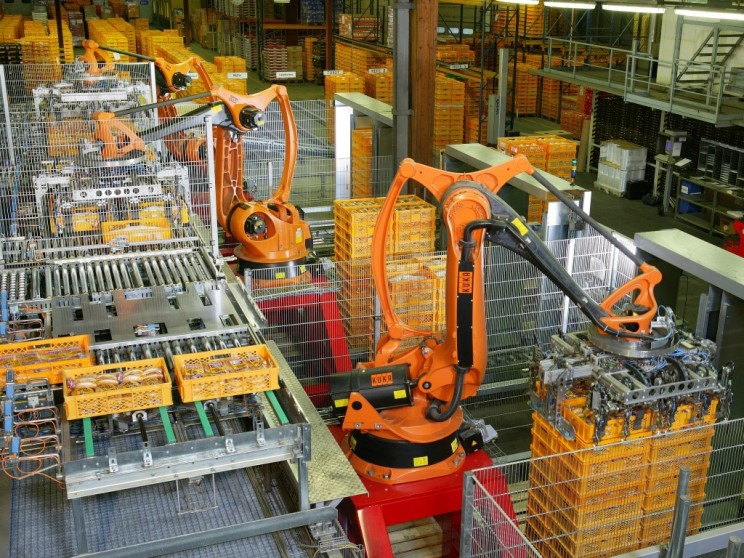
1. Enhanced Automation

Artificial Intelligence for Enhanced Automation
Source: KUKA Roboter GmbH, Bachmann/Wikimedia Commons
Today, AI can perform intensive human labor and backbreaking tasks easily without the

need for human intervention. This has immensely automated several applications and tasks in
industries as well as in different sectors.
This has reduced operational costs and the cost of manpower substantially, bringing about an
]AI automation to a level that has not been witnessed before.
A beautiful example of the wonders of AI in enhancing the level of automation can be seen in
the Japanese machine tool builder, Okuma. They recently offered a multitude of innovations to
showcase the future of smart manufacturing.
This includes robots for plants of all sizes, new and improved machine tools, and smart machine
tools. This clearly demonstrates the blessing of AI in the automation of industries.

2. Eliminates the Necessity for Humans to Perform

Tedious Tasks

AI Eliminates Tedious Human Tasks
Source: Chiragjain dr/Wikimedia Commons
Artificial Intelligence can also be considered a boon to humanity given the fact that
it liberates humans and allows them to perform tasks in which they excel.
We can base the necessity of AI and its applications on the argument that this technology takes
care of all the tedious tasks that human must perform in order to achieve varied results.
Machines excel in taking care of cumbersome works, and this leaves enough room and time
for humans to work on more creative and interpersonal aspect of their life.
Let’s take the example of the banking sector that has and will be seeing a major breakthrough,
thanks to the applications of AI. Financial institutions today are seen taking
full advantage of this technology to make banking quicker and infinitely easier for the
consumers.
This has gone a long way in helping financial analysts get some reprieve from the tedious
nature of their jobs and focus on deeper research and analysis of all-around
consumer experience.

3. Smart Weather Forecasting

Smart Weather Forecasting with AI
Source: Mohammed Tawsif Salam/Wikimedia Commons
In the recent few years, we have seen the use of Artificial Intelligence and its technologies in
weather and climate forecasting. The field of “Climate Informatics” is constantly blossoming as
it inspires a fruitful collaboration between data scientists and climate scientists.
This collaboration has come up with tools to observe and analyze increasingly complex climate
data. This has helped significantly in bridging the gap between understanding and data.
There are countless applications of AI aimed for accurate weather forecasting. IBM,
for instance, used its computers to improve their forecasts back in 1996.
This American multinational has ever since been refining and enhancing its forecasting methods
with the incorporation of AI.
Humans now have an increased understanding of the effects and reasons for climate change.
The field of weather forecasting is super demanding and calls for intensive computing and
deep-learning networks that can empower computers to dish out complex calculations.
Therefore, the advances in AI and its enviable computational power have led to the emergence
of supercomputers.
This has given the man a much-needed insight into extreme climatic events so that possible
disasters and natural hazards can be given a wide berth.

4. Next Generation Disaster Response

AI for Disaster Response
Source: US Defense Advanced Research Projects Agency/Wikimedia Commons
California saw major destruction in 2017 due to the onslaught of wildfires. More than 1 million
acres worth of land was reported burned in wildfires that claimed the lives of 85 people with
249 people listed as missing.
Due to the threats of climate change, more and more companies are now
embracing artificial intelligence to fight disasters with algorithms.
Hence, AI has aptly demonstrated its indispensability in analyzing smart disaster responses and
providing real-time data of disasters and weather events.
This is extremely useful for humans as they can detect the vulnerabilities of an area and hence
help in improving disaster preparation.
The AI techniques are also beneficial as they warn us in a timely manner with enough room to
organize ourselves in the face of an impending disaster and minimize loss.
It is also expected that deep-learning will soon be integrated with disaster simulations to come up
with useful response strategies.

5. Frees Humans of The Obligation of Taking Up All

Responsibilities

Modern Warfare with AI

Source: Program Executive Office Soldier/Flickr
It is a common belief that AI will one day be the end of humanity and robots and machines will
take over the planet completely and permanently.
However, what is usually ignored is the fact that the incorporation of AI in our daily lives helps
free us of all responsibilities that we do not want or need.
Needless to say, we cannot let superior intelligence blindly control us. However, not employing
its benefits for our advantage would be an equally ignorant thing to do.
A persuasive example in this regard is the future of war and weaponry. AI shows immense
promise as a potential application in war as stipulated in Paul Scharre’s book “Army of None.”
As stated in his book, in the future, militaries and machine intelligence are expected to work in
tandem to conduct wars.

6. The Perfect Marriage of Creativity and Technology

AI can most definitely be called the perfect marriage of creativity and technology.
Artificial Intelligence is nothing but a robotic machine that has the ability to think intelligently
and creatively as well as translate these thoughts autonomously in varied human applications.
This fundamental basis of Artificial Intelligence is what has and can revolutionizethe face of
mankind. AI is not merely a unidimensional technology.
Its benefits and applications are far more important and noteworthy than its apprehensions, and
this is precisely what will help humans in the future as well.
The Generation Z engagement strategies show just how AI marries creativity and technology to
create the perfect results. Using the powerful tool of Artificial Intelligence, brands can now apply
the correct technology to align with the needs and wishes of Gen Z.
This marketing solution that is largely data-driven is just one in a huge list of applications of AI
in bringing its technological goodness and creativity together.

7. Zero Scope for Errors

AI for Better Accuracy
Source: Pixabay
Clive Swan, the Senior Vice President of Oracle Adaptive Intelligent Apps, shares the promise
of AI and its automation as it eliminates the compulsion of human intervention an hence,
removes all scope for human error.
The best thing about AI and its plenty of technologies is that it is error-free. Industries and
organizations usually have to leave a significant room for human error because it is natural to
see its presence in manual human labor.

Latest Post

Discover Free Online Developer Tools That Save Time

  As developers, we often find ourselves jumping between apps or writing quick scripts just to generate a UUID, calculate percentages, or ma...