Monday, September 2, 2019

Key factors to plan your first IoT product

The Internet of Things (IoT) is often talked about as some distant future vision. Consumers dream about connected lives, journalists talks about how IoT will change the web.
It might come as a surprise to learn that 451 research found in July 2016 that 65% of enterprises were already using IoT based Technologies and solutions. Gartner says that by 2020 there will be more than 26 billion IoT devices will be available for public

Below are the factors that entrepreneurs and startups should consider while planning for their first IoT product:


  • Prototype Cost: 
  • Cost is very important driver in almost all IoT based projects. Its recommended to invest resources in prototype extensively, before jumping into full scale product development. Prototyping is the best route to happy customers so be sure to test user’s desire, the hardware’s materials and costs and the product’s ease of use because it help you to figure out if the desired prototype fits in users lives and also check if they like the product. Skipping the prototyping phase locks your company into a product that may fall flat. A more cost effective approach is building a Minimum Viable Product prototype to help building a roadmap to cost reduction and bring out the business case.

  • Production cost: 
  • Do not underestimate the production cost for IoT based solution. Many startup IoT projects fail not because of the bad idea but they tend to focus on hardware and software at the same by doing multiple things are the same time with the limited resource. The cost to produce hardware at scale often catches entrepreneurs off-guard and overwhelms the budget. The cost difference between using an Arduino and off-the-shelf parts is vastly different from custom circuitry and a scalable assembly line in Shenzhen. So instead of over promising with the hardware, try to get wins from software.

  • Focus on Software:
  • IoT can make products appear seamless. All such IoT devices somehow connect to a smartphone or web and then make users want to quit. It may take a few tries to create a dependable connection, but no IoT device works without one. Your software is a big part of the user experience, so make use of software in such a way that it supports the hardware functionalities which is easy to understand for the users and simplify the usage.

  • Build to serve, not to impress: 
  • IoT solutions is not all about sticking a chip in a device and calling it an IoT based solution. Many have tried this and have failed as well. What’s more ahead is that you need to test assumptions about customer by asking yourself question like “what do my customers actually need?” and then create a device that delivers its true value.

  • Product testing by Users : 
  • The prototype that you build is likely to charm users but it is important to put your product into their hands for them to test it at the early stage and to give you feedback on the same. It’s easy to become emotionally invested in your work, but don’t be afraid to share a product that isn’t perfect. The valuable information you’ll glean is worth the discomfort.

Wednesday, July 3, 2019

AI Found A New Exoplanet In Faraway Solar System

  • Google used Deep Neural Network to analyze Kepler’s data. 
  • They found two new exoplanets – Kepler-90i and Kepler-80g. 
  • The model they’ve developed is about 96% accurate in distinguishing planets and non-planets. 
For many centuries, people have looked up at stars, noticed some patterns and recorded observations. One of the early things discovered in space was planets, which the Greeks called ‘wanderers’ or ‘planÄ“tai’ for their irregular movements. Gradually we came to know our solar system hosts several planets revolving around the Sun.
With the help of modern technologies like digital camera, space flight, telescope optics and computers, we can extend our knowledge beyond our own solar system and detect/identify planets thousands of light years away from Earth. They are called exoplanets – part of another solar system far in space.
However, finding exoplanets is an extremely difficult task. Unlike their host stars, they are small, cold and dark. At present, we use machine learning techniques to accurately spot exoplanets. One of such techniques is used by Google, and they detected two extoplanets, named Kepler 90i, orbiting around a yellow dwarf star Kepler 90, and Kepler-80g revolving around Kepler 80. Let’s find out how did they do it.

Data Used :

The primary method to search exoplanet is to analyze a vast amount of data captured by NASA’s Kepler Space Telescope using both manual analysis and automated software. In 4 years, the telescope observed around 200,000 stars, capturing an image every half an hour. Kepler’s sole scientific instrument, Photometer continuously monitors the brightness of more than 145,000 main sequence stars in a fixed view field. These data are sent to Earth, and then deeply examined to identify exoplanet’s periodic dimming caused by revolving around their host star.
This all generates about 14 billion data points, which further translate to approximately 2 quadrillion possible planet orbits. Even the most powerful computer takes an extremely long time to process these massive amounts of data. In order to make this process faster and more efficient, Google used Deep Learning tools and techniques.

The Machine Learning Approach

Machine learning is the form of artificial intelligence that teaches computer to recognize specific patterns. It is specifically helpful in making sense of large volumes of data. Here, the idea is to allow machines learn by training and examples rather than programming it with particular rules.

Deep learning, which is a type of machine learning, uses computational layers to create progressive complex features that are useful for classification problems. For instance, a deep picture classification model may first recognize simple edge features that can be further used to detect corners and curves, until the final feature layer of the model can distinguish between complex objects.
Deep neural networks (type of deep learning model) have become the state-of-the-art in several tasks, including image classification. Most of the times it performs better than the models developed with hand designed features. A neural network is trained to minimize a cost function that measures how far its predictions are from the training set’s true labels.
The Google AI team used a dataset of over 15,000 Kepler signals to create a TensorFlow model for distinguishing planets from other celestial body. To do this, the system had to detect and recognize actual planet’s pattern vs patterns caused by other bodies like binary stars and starspots.
They developed a deep neural network for automatically examining Kepler threshold crossing events (TCEs – detected periodic signals, which might be consistent with transiting planets). The model uses light curves as inputs and is trained on a set of human-classified Kepler TCEs.
The views of input are fed via separate convolution columns – a successful method in previous image classifications. It’s capable of distinguishing space bodies with decent accuracy – the subtle differences between actual transiting exoplanet and false positives like instrument artifacts, eclipsing binaries and stellar variability.

Tuesday, June 18, 2019

Benefits of Artificial Intelligence (AI)

Artificial Intelligence is leading the way to change life on Earth for the better
significantly.


Artificial Intelligence (AI) is an intriguing concept that has fascinated experts and laymen alike for years now.

1. Enhanced Automation
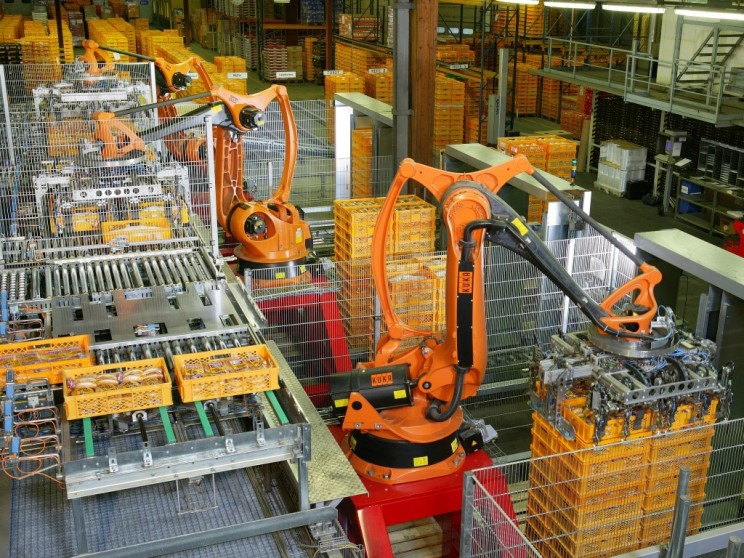
Artificial Intelligence for Enhanced Automation
Source: KUKA Roboter GmbH, Bachmann/Wikimedia Commons
Today, AI can perform intensive human labor and backbreaking tasks easily without the

need for human intervention. This has immensely automated several applications and tasks in
industries as well as in different sectors.
This has reduced operational costs and the cost of manpower substantially, bringing about an
]AI automation to a level that has not been witnessed before.
A beautiful example of the wonders of AI in enhancing the level of automation can be seen in
the Japanese machine tool builder, Okuma. They recently offered a multitude of innovations to
showcase the future of smart manufacturing.
This includes robots for plants of all sizes, new and improved machine tools, and smart machine
tools. This clearly demonstrates the blessing of AI in the automation of industries.

2. Eliminates the Necessity for Humans to Perform

Tedious Tasks
AI Eliminates Tedious Human Tasks
Source: Chiragjain dr/Wikimedia Commons
Artificial Intelligence can also be considered a boon to humanity given the fact that
it liberates humans and allows them to perform tasks in which they excel.
We can base the necessity of AI and its applications on the argument that this technology takes
care of all the tedious tasks that human must perform in order to achieve varied results.
Machines excel in taking care of cumbersome works, and this leaves enough room and time
for humans to work on more creative and interpersonal aspect of their life.
Let’s take the example of the banking sector that has and will be seeing a major breakthrough,
thanks to the applications of AI. Financial institutions today are seen taking
full advantage of this technology to make banking quicker and infinitely easier for the
consumers.
This has gone a long way in helping financial analysts get some reprieve from the tedious
nature of their jobs and focus on deeper research and analysis of all-around
consumer experience.

3. Smart Weather Forecasting

Smart Weather Forecasting with AI
Source: Mohammed Tawsif Salam/Wikimedia Commons
In the recent few years, we have seen the use of Artificial Intelligence and its technologies in
weather and climate forecasting. The field of “Climate Informatics” is constantly blossoming as
it inspires a fruitful collaboration between data scientists and climate scientists.
This collaboration has come up with tools to observe and analyze increasingly complex climate
data. This has helped significantly in bridging the gap between understanding and data.
There are countless applications of AI aimed for accurate weather forecasting. IBM,
for instance, used its computers to improve their forecasts back in 1996.
This American multinational has ever since been refining and enhancing its forecasting methods
with the incorporation of AI.
Humans now have an increased understanding of the effects and reasons for climate change.
The field of weather forecasting is super demanding and calls for intensive computing and
deep-learning networks that can empower computers to dish out complex calculations.
Therefore, the advances in AI and its enviable computational power have led to the emergence
of supercomputers.
This has given the man a much-needed insight into extreme climatic events so that possible
disasters and natural hazards can be given a wide berth.

4. Next Generation Disaster Response

AI for Disaster Response
Source: US Defense Advanced Research Projects Agency/Wikimedia Commons
California saw major destruction in 2017 due to the onslaught of wildfires. More than 1 million
acres worth of land was reported burned in wildfires that claimed the lives of 85 people with
249 people listed as missing.
Due to the threats of climate change, more and more companies are now
embracing artificial intelligence to fight disasters with algorithms.
Hence, AI has aptly demonstrated its indispensability in analyzing smart disaster responses and
providing real-time data of disasters and weather events.
This is extremely useful for humans as they can detect the vulnerabilities of an area and hence
help in improving disaster preparation.
The AI techniques are also beneficial as they warn us in a timely manner with enough room to
organize ourselves in the face of an impending disaster and minimize loss.
It is also expected that deep-learning will soon be integrated with disaster simulations to come up
with useful response strategies.

5. Frees Humans of The Obligation of Taking Up All

Responsibilities

Modern Warfare with AI

Source: Program Executive Office Soldier/Flickr
It is a common belief that AI will one day be the end of humanity and robots and machines will
take over the planet completely and permanently.
However, what is usually ignored is the fact that the incorporation of AI in our daily lives helps
free us of all responsibilities that we do not want or need.
Needless to say, we cannot let superior intelligence blindly control us. However, not employing
its benefits for our advantage would be an equally ignorant thing to do.
A persuasive example in this regard is the future of war and weaponry. AI shows immense
promise as a potential application in war as stipulated in Paul Scharre’s book “Army of None.”
As stated in his book, in the future, militaries and machine intelligence are expected to work in
tandem to conduct wars.

6. The Perfect Marriage of Creativity and Technology

AI can most definitely be called the perfect marriage of creativity and technology.
Artificial Intelligence is nothing but a robotic machine that has the ability to think intelligently
and creatively as well as translate these thoughts autonomously in varied human applications.
This fundamental basis of Artificial Intelligence is what has and can revolutionizethe face of
mankind. AI is not merely a unidimensional technology.
Its benefits and applications are far more important and noteworthy than its apprehensions, and
this is precisely what will help humans in the future as well.
The Generation Z engagement strategies show just how AI marries creativity and technology to
create the perfect results. Using the powerful tool of Artificial Intelligence, brands can now apply
the correct technology to align with the needs and wishes of Gen Z.
This marketing solution that is largely data-driven is just one in a huge list of applications of AI
in bringing its technological goodness and creativity together.

7. Zero Scope for Errors

AI for Better Accuracy
Source: Pixabay
Clive Swan, the Senior Vice President of Oracle Adaptive Intelligent Apps, shares the promise
of AI and its automation as it eliminates the compulsion of human intervention an hence,
removes all scope for human error.
The best thing about AI and its plenty of technologies is that it is error-free. Industries and
organizations usually have to leave a significant room for human error because it is natural to
see its presence in manual human labor.

Wednesday, March 13, 2019

Emerging Tech Trends For Future

2017 was certainly a epic year for technological innovation and digital transformation. But we have only recently entered the era of the Fourth Industrial Revolution and 2018 promises to see more exponential changes. There are several areas where Chuck Brooks see impact that he has briefly highlighted. Below are his predictions:
 1) The Internet of Things (IoT)
Predictions from only a couple of years ago envisioned 50 billion devices (including our smartphones, appliances, and office equipment) connected to the internet by 2020. Now estimates may go beyond that. In 2018 the growth of IoT connectivity will sure with 5G networks, cloud computing, and cheaper sensors. 
2) Artificial Intelligence (AI) 
 AI will see large gains in both capability and performance in 2018.Emergent artificial intelligence (AI) technologies are no longer things of science fiction and will likely change operations and have arrived. Companies are already developing technology to distribute artificial intelligence software to millions of graphics and computer processors around the world.  Robotics are also becoming more ingrained in the deployment of AI. No doubt this will have implication on governing, commerce, sustainability, health, and even how we fight wars in the future
3) Smart Cities 
2018 will be the year of The Smart Cities. Smart Cities integrate transportation, energy, water resources, waste collections, smart-building technologies, and security technologies and services. The term “smart city” connotes creating a public/private infrastructure to conduct activities that protect and secure citizens. This includes shared situational awareness and enabling integrated operational actions to prevent, mitigate, respond to, and recover from cyber incidents as well as crime, terrorism and natural disasters. 
4) Quantum and Super-Computing
We have come a long way from the rather large and slow PCs. We are now at the footstep of quantum computing in The Cloud with flexible and wearable electronics. Recent breakthroughs in physics, nanotechnologies, and materials science have brought us into a computing reality that we could not have imagined a decade ago. As we get closer to a fully operational quantum computer, a new world of supercomputing beckons that will impact on almost every aspect of our lives. 
5) Big Data Analytics
According to Eric Schmidt, CEO of Google, we produce more data every other day than we did from the inception of early civilization until the year 2003 combined. Therefore organizing, managing and analyzing data is more important than ever. Big data and data analytics are collapsing the information gap and giving businesses and governments the tools they need to uncover trends, population movements, customer preferences, demographics, commerce traffic, transportation, etc. These tools (enhanced via machine learning and artificial intelligence) can also help several industries, including customer service, by identifying caller trends; healthcare, by flagging potential fraud; and financial services, by proactively flagging a borrower that is on the verge of lapsing in payment. In 2018, the capabilities of data analytics is something agencies and businesses cannot ignore because it can increase productivity, efficiency, decision-making and new business activities.
6) Block Chain
In a nutshell, Block Chain is a technology and process for managing data and digital assets. It can be characterized as a public decentralized and distributed ledger technology that records historical transactions of any asset or currency. It functions as a peer-to-peer community network via a consensus-driven process. It is the technology behind cryptocurrencies. Block Chain acts both as the information and the conduit. It also creates an audit trail that makes it appealing for reconciliation purposes of historical records, transactions and regulations that will impact a whole host of future functions and services, including cybersecurity. The issue has been the scalability of Block Chain. In 2018 there may be a breakthrough in that capability, especially with cryptocurrencies. That alone could be disruptive.
7) 3-D PRINTING
Smart 3-D printing is trailblazing future manufacturing. 3-D printing connotes a three-dimensional object that is created layer by layer via computer-aided design programs. To be able to print the object, the computer divides it into flat layers that are printed one by one. By printing with advanced pliable materials such as plastics, ceramics, metals and graphene, there have already been breakthroughs in prosthetics for medicine and wearable sensors. The big advantage is that 3-D printing can be customized, produced rapidly and is cost effective. In 2018 look for wider adoption of 3-D printing technologies in manufacturing in construction, healthcare, and in consumer industries.
I have just touched on only a few tech trends of our new technological era and speculated on what 2018 may bring. Also look for great gains for technologies and applications in Robotics, Drones, and medical nanotechnologies. With benefits come risks and the real imperative for society is planning and adaptation or we will lose control of the promise of technological innovation. 
About Chuck Brooks
Chuck Brooks is President of Brooks Consulting International. In both 2017 and 2016, he was named “Cybersecurity Marketer of the Year by the Cybersecurity Excellence Awards. LinkedIn named Chuck as one of “The Top 5 Tech People to Follow on LinkedIn” out of their 500 million members. He is also an advisor to LinkedIn on cybersecurity and emerging technology issues. He has published more than 100 articles and blogs on cybersecurity and technology issues. Chuck’s professional industry affiliations include being the Chairman of CompTIA’s New and Emerging Technology Committee, and as a member of The AFCEA Cybersecurity Committee. In government, Chuck has served at The Department of Homeland Security (DHS) as the first Legislative Director of The Science & Technology Directorate at the Department of Homeland Security. He served as a top Advisor to the late Senator Arlen Specter on Capitol Hill covering security and technology issues on Capitol Hill.  In academia, Chuck was an Adjunct Faculty Member at Johns Hopkins University where he taught a graduate course on homeland security for two years. He has an MA in International relations from the University of Chicago, a BA in Political Science from DePauw University, and a Certificate in International Law from The Hague Academy of International Law.  
Chuck can be reached on LinkedIn:  https://www.linkedin.com/in/chuckbrooks/
or on Twitter: @ChuckDBrooks

Saturday, December 1, 2018

IoT solutions - Trending in home appliances

The objects connected to the internet is termed as internet of things profoundly known as IoT. It has made its way to build any individual’s lifestyle in a better shape. Gartner estimated around 6.4 Billion objects to be connected by the end of 2016. With smartphones, smart watches and many more smart devices, we have evolved to be enduring a smart living. Along with that, we have a smart home solution in place that to enhance the lifestyle of individuals.
LG and Philips have been on track to implement IoT solution to provide automated solutions for the home. Moreover, with LG providing alerts at machine failure and Philips providing smart lighting solutions, internet of things is going to become a household name now.

Why IoT is a solution to make its way home?

By 2025, 50% of U.S. homes will be connected with smart devices. Moreover, home automation will be a cognitive approach by the individuals to look forward to home security and energy monitoring.
For users:
Security: You don’t need to worry about forgetting to lock the door of your home with smart lock system. Your house will be secured by just one command over the app.
Convenience: When you are too chilled on your way home and the heater takes longer to warm the room, just remotely turn on the heater while you are a few minutes away from reaching.
Energy efficiency: The user can monitor the home appliances and switch them on or off when required. This also trails in using the energy efficiently and alleviates the energy wastage.
Cost efficiency: The remote management of appliances can not only help you save energy but it will also reduce the spend on the utility bill
For providers:
  • By providing security features to your customers, you gain the trust of your audience.
  • The means of comfort provided by the products you serve your customers will help you gain a word-of-mouth popularity.
  • By saving energy, ultimately you contribute towards a better living.
  • Cost optimization is always a feature that an individual is looking for. Also, providing your customers money-saving solutions will help you achieve a better audience prospectus.

How does IoT remotely secure your appliances?

IoT based home automation uses connected devices that send signals to the smartphones. The sensors, however, work constantly to deliver and receive the signals. Wireless home automation using cloud technology to store the data of your connected objects. The RF based home automation system, moreover,  uses RF signals to transmit the data to the user’s smartphones for smart alerts.

Latest Post

Discover Free Online Developer Tools That Save Time

  As developers, we often find ourselves jumping between apps or writing quick scripts just to generate a UUID, calculate percentages, or ma...